In progress
Island Forge
- Systems design
- Simulation
- Iterative development
A low-poly island ecology sandbox where players shape terrain, establish habitats, and observe wildlife. I lead its design and visual direction, with AI-assisted development.
Skills used
- Feature prioritization
- Designing connected systems
- Visual direction
- Playtest feedback
What I’m learning
Godot and GDScript workflows, save compatibility, and testing interactions between simulation systems. A key lesson: a believable world depends on rules that work together, as well as individual features.
Developed with AI assistance. My role, implementation details, and evidence are described below.
The idea behind the island
I began with a simple goal: create an editable, low-poly island inspired by ecology games. Players would shape the landscape and watch life develop. The earliest documented brief focused on the foundation: a mostly flat island surrounded by ocean, a raised center, and terrain-editing tools. The wider ecology sandbox developed from that starting point.
My role and tools
As creator and design lead, I define the player experience, feature priorities, ecological constraints, and visual direction. I review models and use playtesting to guide revisions. AI assistance supports programming, procedural assets, debugging, documentation, and testing.
The project uses Godot, GDScript, Godot shaders, and Blender with Python for model workflows.
September 8, 2026
Starting with the landscape
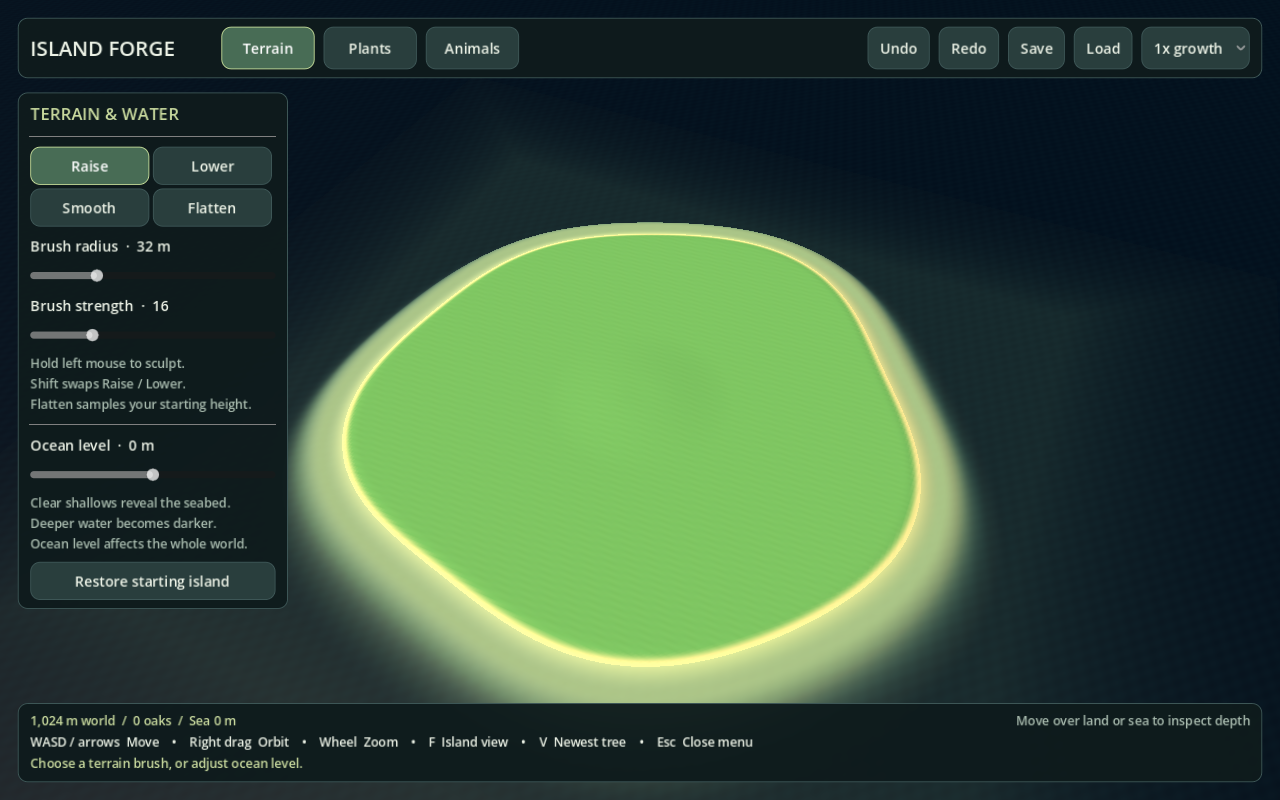
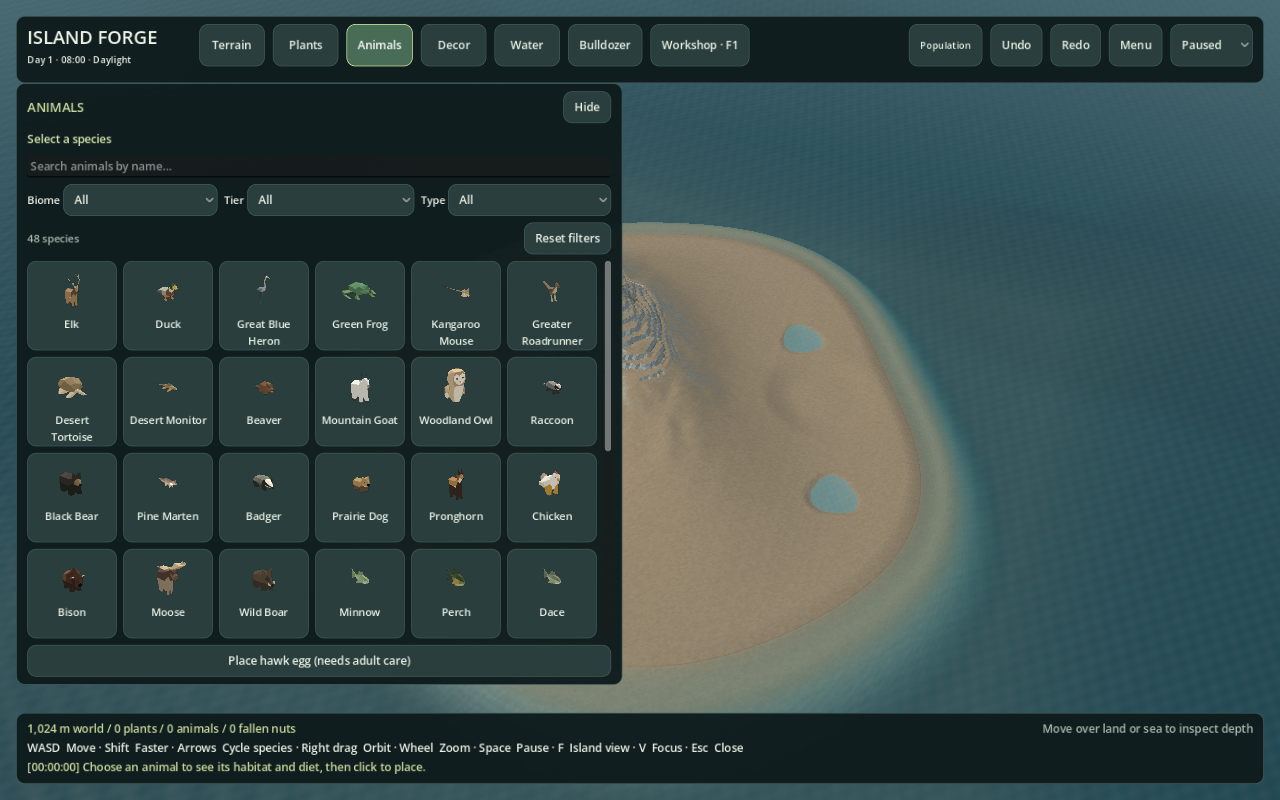
The first documented prototype established procedural terrain, an ocean shader, camera controls, and brushes for raising, lowering, flattening, and smoothing the ground. Undo, redo, and save/load supported experimentation. This gave the project a world-building foundation before the later ecology systems expanded.
September 8, 2026
Letting plants shape habitats
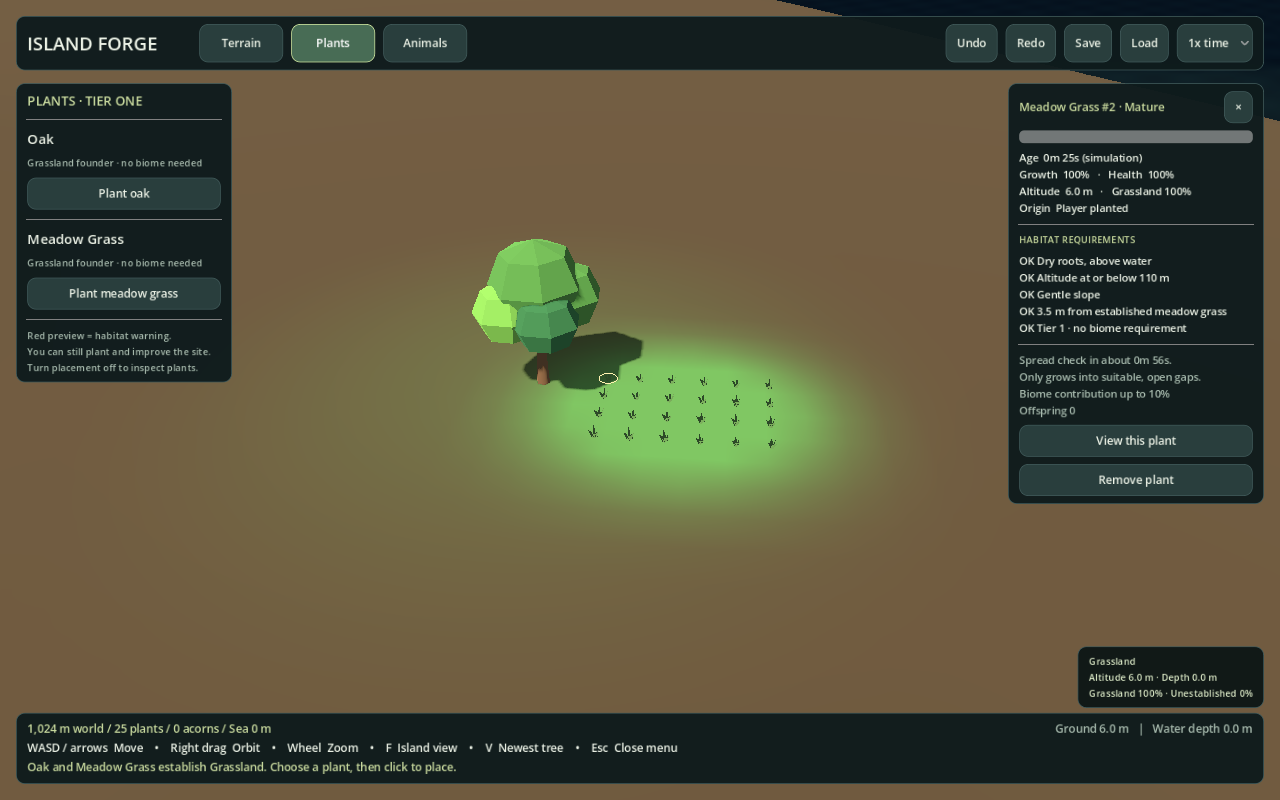
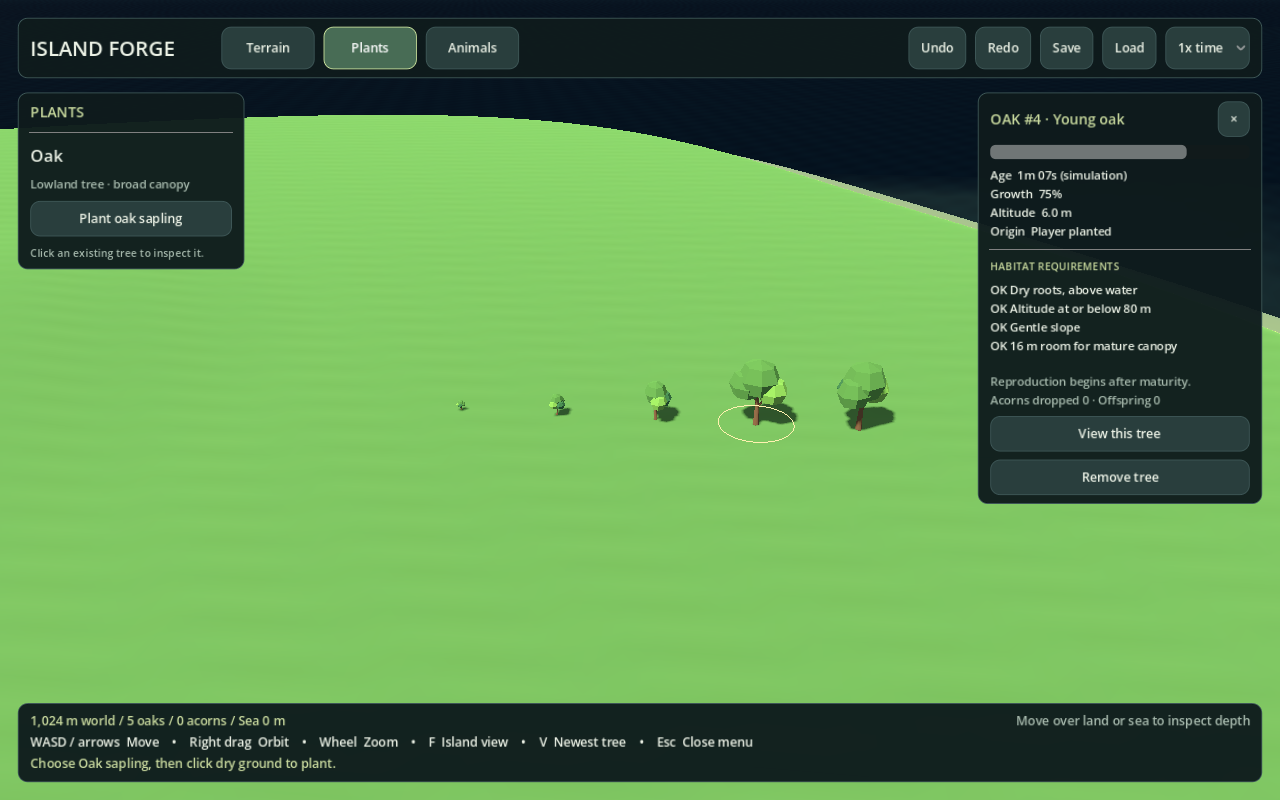
Early plant work introduced oak growth and meadow grass that changed local ground color and contributed to grassland habitat. This became an important design direction: living plants would help establish the environment, connecting the island’s appearance to the ecosystem the player created.
September 9–17, 2026
Expanding into an ecology sandbox
Development expanded into wildlife movement, feeding, reproduction, aquatic systems, and additional habitats. Three saved-world slots were documented by September 16. I directed development toward shared systems and believable behavior with limited food and bounded populations.
Development also involved changing course. On September 17, dynamic water was retired at my request and static lakes were retained. The records document the decision, but do not establish a complete rationale for it.
October 1–6, 2026
Making iteration persistent and consistent
I wanted species experiments to preserve ongoing worlds. The persistent F1 Species Workshop replaced the earlier temporary testing approach, storing applied definitions and allowing them to become new-game defaults. I also restored a visual direction centered on connected, flowing low-poly animal forms.
Playtesting exposed a tradeoff in performance work: simulation batching made animals look choppy. Ordinary play returned to complete simulation ticks with movement interpolation. The lesson was to assess visible movement alongside CPU measurements; smaller callbacks alone did not establish a smoother experience.
October 7–8, 2026
Building a more cohesive jungle
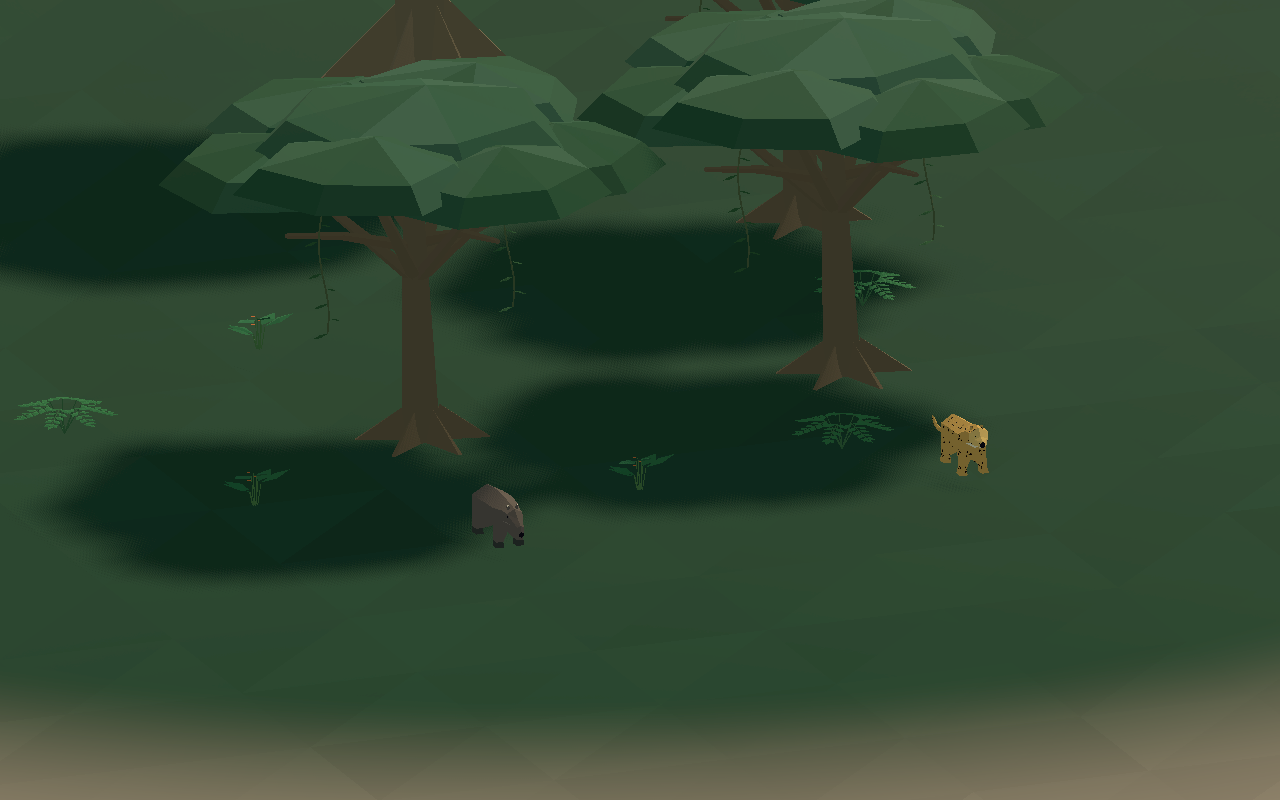
Later work refined plants, ocean systems, and the jungle habitat. For the jungle, I requested plant review before animal integration, with broad overlapping crowns and an open, navigable forest floor. This linked visual review to how the habitat should function. Some integrated models remained drafts awaiting approval.
October 9, 2026
Making wildlife visible and protecting progress
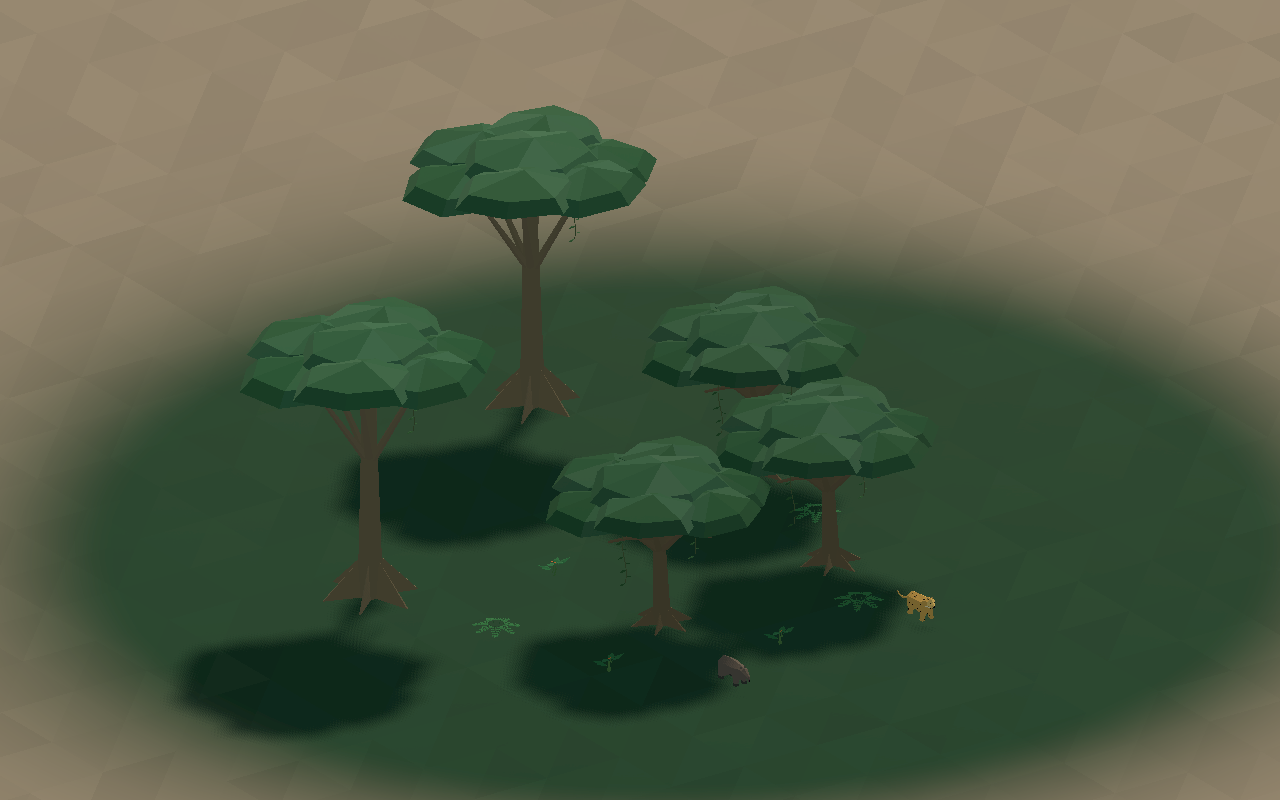
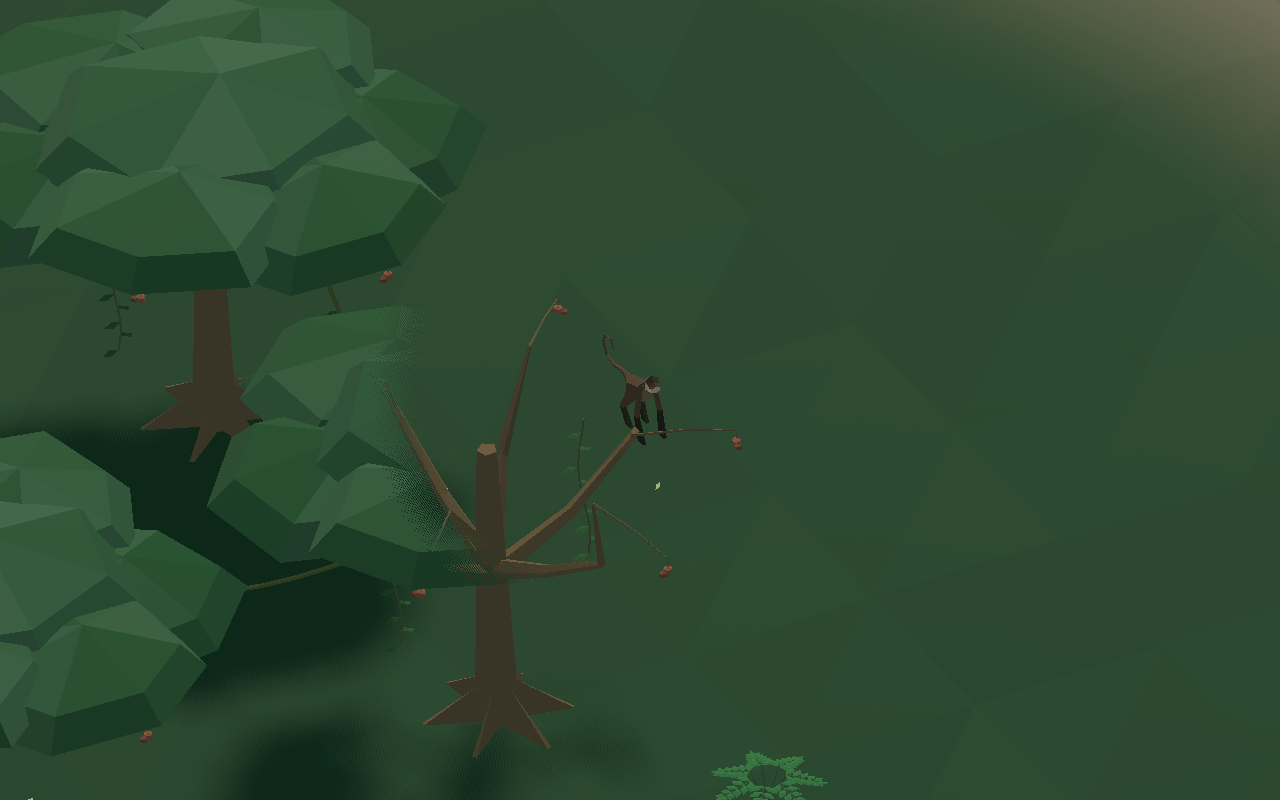
Dense crowns hid canopy wildlife. A local viewing window clears foreground foliage while retaining branches, vines, and fruit, with matching visibility rules for selecting animals. Focused historical tests and renderer captures document this work.
A separate save-data issue led to validation of pending snapshots before existing save files are replaced. This protects against invalid writes; it does not recover missing animal data or establish the original corruption cause. These challenges reinforced the importance of observing behavior and preserving player progress as the sandbox grows.
Where the project stands
Island Forge has grown from an editable island into a sandbox with plant-driven habitats, renewable plants and finite foods, wildlife and family behavior, richer catalogs, saved worlds, and editable species definitions. The focus remains building, observing, and experimenting.
Balance, performance, reliability, and draft-model review are ongoing work. Currency, objectives, species unlocks, and purchased traits inherited by offspring remain planned directions; their costs, requirements, and limits are undecided.
Evidence and status
This in-progress story covers records from September 8 through October 9, 2026, not necessarily the project’s full lifespan. The earliest brief is supported by a retained conversation summary rather than an available original transcript. Screenshots and focused test results are historical evidence; they do not establish complete stability, long-term ecological balance, or fresh verification of the game today.